Genomics: Making Genetic Risk Testing an Everyday Part of Healthcare

Slice of Healthcare Team
05/29/2025


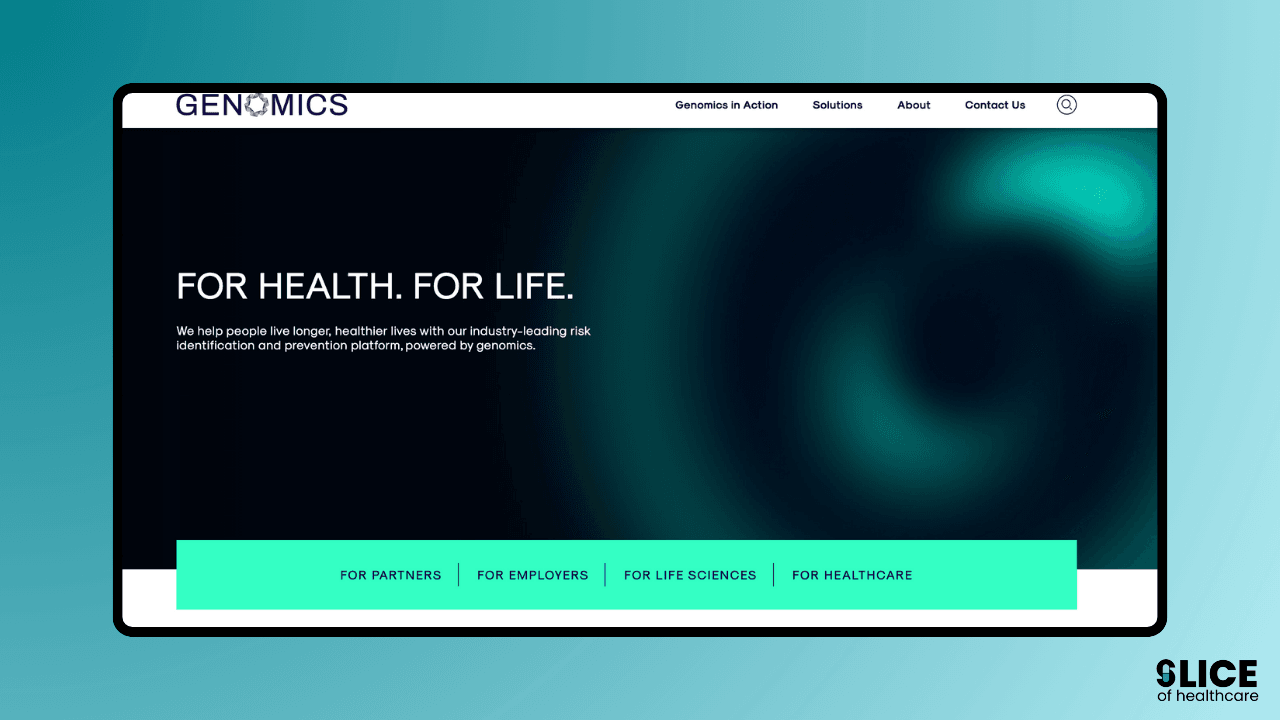
For decades, medicine has relied on reacting to symptoms after they appear. But what if we flipped the script—and caught the warning signs hidden in our DNA before illness ever surfaced? Genomics, the company founded by Sir Peter Donnelly, is doing just that. After a decade of building one of the world’s most comprehensive genetic databases, Genomics is helping individuals and healthcare systems detect risk early—and act on it.
What Genomics Does (Without the Jargon)
Genomics is both a data powerhouse and a precision toolmaker. The company collects large-scale genetic data and develops algorithms that interpret this information to help two main audiences: pharmaceutical companies and health systems.
For pharma, Genomics helps find and validate drug targets and identify which patients are most likely to benefit from new treatments. For healthcare providers and insurers, Genomics helps predict who’s at risk for common diseases—like heart disease, diabetes, and certain cancers—so those individuals can take preventive steps earlier.
From Academia to Action: How It All Started
Peter Donnelly spent most of his career in academia, navigating the intersection of mathematics, statistics, and genetics. He was a central figure in many landmark genomics studies and led the UK’s 100,000 Genomes Project. But despite the breakthroughs in genetic research, Donnelly saw a disconnect: the science wasn’t reaching patients.
“There was this extraordinary potential to change lives—and none of it was being used in the real world,” he said. That’s why, in 2014, he left academia to launch Genomics. The goal? Turn cutting-edge science into actionable tools for medicine.
What Makes Genomics Different
Ten years in, Genomics has built one of the largest and most unique genetic datasets in the world. But it’s not just about scale—it’s about what they do with it.
Unlike traditional models that only find medical risks in 1–2% of people (usually linked to rare genetic disorders), Genomics now identifies actionable risks in 70% of healthy adults. That’s a seismic shift. And because the company includes both genetic and clinical data (like blood pressure or cholesterol), its models offer a far more complete picture of health.
A Real-World Shift: From Pharma to Prevention
Genomics’ work with partners like Vertex and GSK shows how genetics is changing drug development. By linking genetic risk scores with trial data, they can pinpoint which patients are most likely to benefit—saving time, money, and lives.
On the prevention side, Genomics is partnering with life insurers like MassMutual. But not to deny coverage—quite the opposite. Life insurers benefit when customers live longer. So it makes business (and moral) sense to offer genetic risk assessments that help people stay healthy longer. It’s a powerful incentive alignment few expected from such a “stodgy” industry.
Expert Insights
Share Your Expert Insights
Have relevant experience or professional perspective? Add your thoughtful insights to this article.