He Built a Virtual Care Startup in a Pandemic. Now It’s Reimagining the Doctor’s Office.

Slice of Healthcare Team
08/18/2025


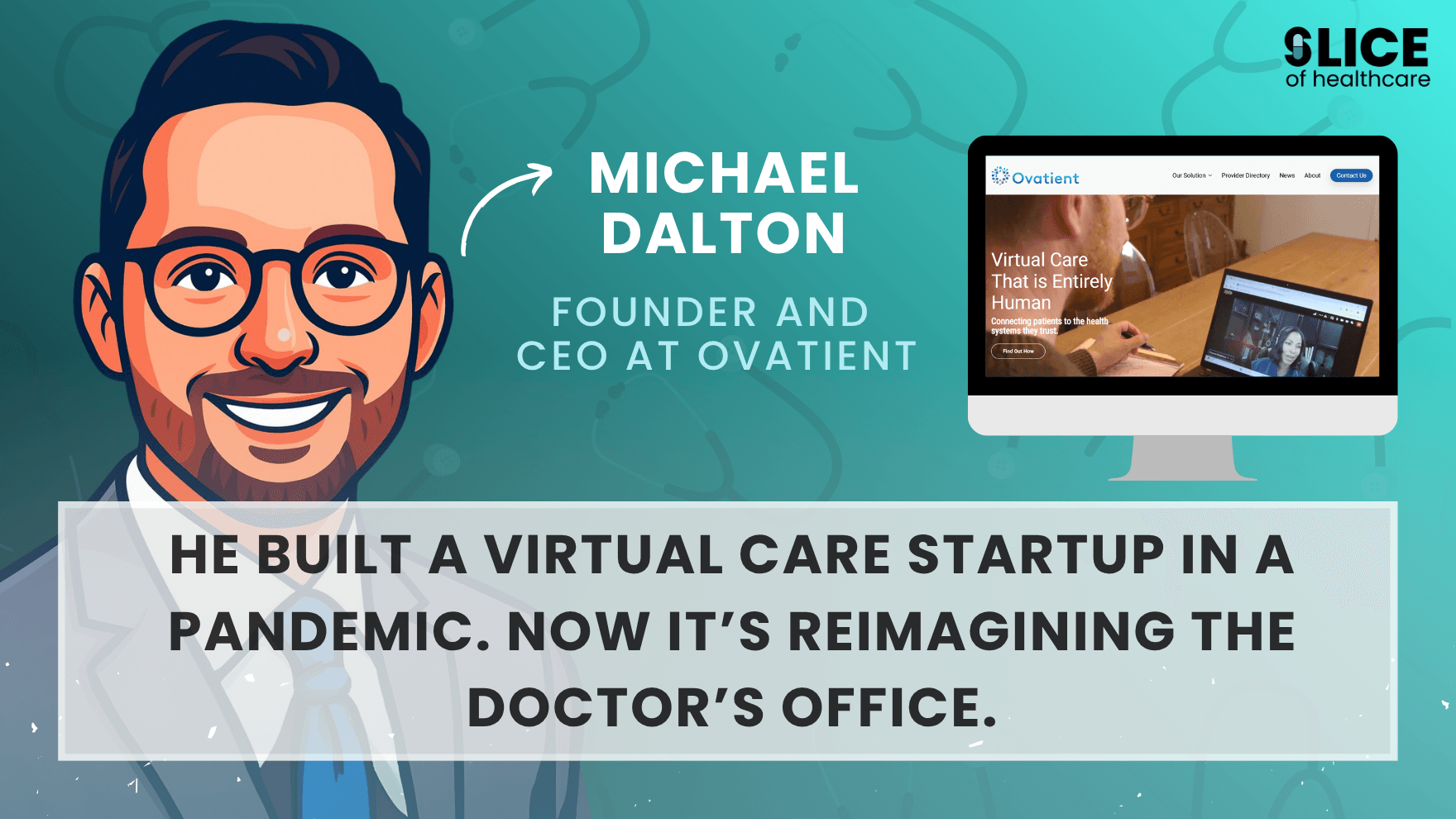
Michael Dalton didn’t set out to start a company. He set out to fix virtual care. What began as a strategy inside a Cleveland hospital became Ovatient, a nonprofit with a for-profit mindset, quietly reshaping how people experience healthcare from home.
What Ovatient Actually Does
Ovatient is a virtual care company that works directly with health systems to deliver high-quality, team-based care that’s deeply integrated with the systems patients already use, especially Epic. It’s not a direct-to-consumer app, and it’s not another one-off urgent care site. Instead, it’s a virtual medical practice that spans primary care, behavioral health, and even specialty services like weight management. Every visit is connected, coordinated, and designed to feel like real care, not a transaction.
From Hospital Strategy to Startup Reality
Dalton spent years inside health systems like Summa Health and MetroHealth, building virtual care programs during the chaos of COVID. He saw firsthand what worked—and more importantly, what didn’t.
One major blocker? Trust. “If [doctors] were going to trust it, if they were going to use it, it needed to be on Epic,” Dalton recalls. So he built around that. Ovatient’s “Epic-first” approach isn't a feature. It’s the foundation.
Why It’s Different (and Better)
While most virtual care still feels like one-off urgent care visits, Ovatient is designed for continuity. Patients might come in for a single issue, but they stay for whole-person care that unfolds over time. “We’re not just treating anxiety or depression in isolation. We’re bringing behavioral health into an overall care journey,” says Dalton.
And it’s working. Ovatient’s Net Promoter Score, a measure of patient satisfaction, has hovered around 82, recently climbing to 87. “That’s unheard of,” Dalton notes.
One Big Use Case: Weight Management
Half of Ovatient’s primary care patients come in seeking help with weight management. It’s not a quick fix. Patients want a connected, high-touch experience, and one that can plug into in-person services when needed. Ovatient delivers that, then links them back to hospital partners for follow-up care if necessary.
Who It’s For
Ovatient is especially appealing to adults in their 20s to early 50s—people juggling work, family, and health, who value convenience but don’t want to compromise on quality. Health systems benefit too, gaining a scalable, modern care layer without ripping out their existing infrastructure.
What’s Next
Internally, Ovatient is scaling fast, set to grow from 40 to over 50 employees. Externally, it’s expanding through a new platform called MyCareAnywhere, built in partnership with League. It’s a way for hospitals to offer their own digital-first care to employers, bridging a gap that’s often filled by fragmented, non-local solutions.
And then there’s the corporate structure. Ovatient was born a nonprofit, rare for a startup in this space, but that could change. “We’re a nonprofit that pays taxes. That’s the worst kind of nonprofit,” Dalton jokes. A hybrid structure, like OpenAI’s, may be on the table.
The Real Reason It Works
Dalton lights up when he talks about his team, especially the providers. “I’m not a provider. I never will be. But I get to hear the stories, the connections, the difference they’re making.” That mission-driven spirit runs deep. Many team members came from hospitals themselves. Some even qualify for student loan forgiveness thanks to Ovatient’s nonprofit status.
Final Thought
Virtual care isn’t new. But Ovatient is proving it doesn’t have to feel impersonal, disconnected, or second-rate. By rooting virtual care in relationships, local systems, and real trust, they’re not just building an app. They’re building the future of primary care.
Expert Insights
Share Your Expert Insights
Have relevant experience or professional perspective? Add your thoughtful insights to this article.